This article originally appeared in Talk Business & Politics on February 22, 2026. Find it here.
Archeologists have uncovered evidence that thousands of years before the Egyptians built the pyramids and the Greeks created the Parthenon, Native Americans hunted, camped and fished at Old Davidsonville.
Pieces of wampum, a quantity of small cylindrical beads made from quahog shells and used as currency by Native Americans, have been found at the 163-acre park located on Arkansas 166 along the Lawrence/Randolph County lines.
The Spanish explored this part of Arkansas in the late 1600s, according to historical accounts. It’s believed the Spanish had a fort or settlement close to Old Davidsonville at or near the modern-day town of Portia. A Spanish coin was plucked from the soil in the old town, and other artifacts that date before the Revolutionary War have been discovered, interpretive guide Ashley Hart previously told Talk Business & Politics.
Old Davidsonville was designated as the county seat for Lawrence County on Jan. 1, 1815, according to the Encyclopedia of Arkansas. At the time it included what would become 30 counties in Arkansas and parts of southern Missouri.
It became the first town in the Natural State to be surveyed. It was the first city to have a post office, beating Arkansas Post by one day, Hart said. The state’s first land office was also located in the town.
Within the next few years a courthouse, tavern, blacksmith shop, and other buildings were constructed. At its peak the town had about 200 people. Criminal and civil courts were held in the town, and when a trial was about to begin, the town’s population would balloon to up to 600 people, Hart said.
Old Davidsonville is one of the many historical tourist spots in Northeast Arkansas.
PILOT TRAINING
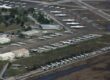
The U.S. government started construction on a pilot school in late summer in 1942 in rural Lawrence County. At its peak, there were more than 5,000 people living on or near the school’s campus, meaning it was larger than nearby Pocahontas or Walnut Ridge, according to the Wings of Honor Museum. An estimated 5,310 men entered pilot training. At least 4,641 pilots were certified. It was reported that 42 pilots lost their lives during training.
The federal government bought more than 3,000 acres to be used by the pilot school. It had three runways that span about 5,000 feet.
CASH SITE
How Johnny Cash and his family came to Dyess, a desolate spot in rural Northeast Arkansas was a common story during a harsh bit of history. Drought, sporadic floods, and the Great Depression decimated family farms in the early 1930s. President Franklin Roosevelt started what was then called a socialist plan to help many farmers in eastern Arkansas.
Ray and Carrie Cash brought their family to the Dyess Colony in 1935, according to historians. The Cash family moved to Dyess with their five children, Roy, 13; Louise, 11; Jack, 5; J.R., 3; and Reba, 1. Joanne and Tommy were born in Dyess. They were given a plot of land to farm and a small house.
Cash’s sister, Joanne, previously told Talk Business & Politics that she was washing dishes with her mother one day and Cash was outside pulling weeds from around a tree.
He was singing to himself and his mother looked at Joanne and said “his voice has changed.” He would become one of the most famed musicians ever. The home that he grew up in was restored and now the Johnny Cash Boyhood Home is a museum dedicated to him and his family and that era.
HEMINGWAY HISTORY
Historians think Ernest Hemingway, the Nobel Prize and Pulitzer Prize winning author, wrote part of “A Farewell to Arms,” an iconic 20th-century novel, during his many trips to Clay County during the late 1920s and 1930s, according to Dr. Adam Long, director of the Hemingway-Pfeiffer Museum and Educational Center in Piggott.
Hemingway’s wife’s family owned thousands of farm land acres during this time, and they would visit and stay for weeks or months at least once a year.
COLD WAR SITE
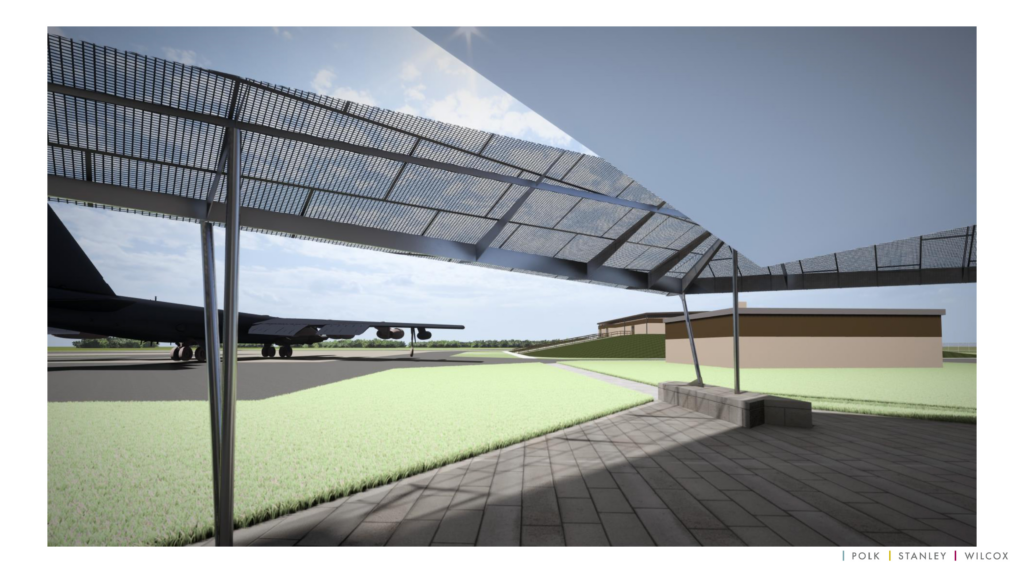
Plans are underway to build the National Cold War Center in Blytheville. The center site is located on the campus of the former Blytheville Air Force Base (originally known as the Blytheville Army Airfield), which opened in 1942 as a training facility for World War II pilots. In 1958, the base was converted to a Strategic Air Command alert mission and remained a key U.S. military command for three decades — through events such as the Cuban Missile Crisis and the signing of the treaties that officially ended the Cold War in the early 1990s.
The center will focus on the base’s alert compound, a facility that housed U.S. Air Force B-52 bomber crews during the 1950s through the 1990s. The base was a top five military target for the former Soviet Union, according to historians.
SULTANA DISASTER
Underneath a soybean field near Marion lies one of the most under-reported tragedies in the country’s history. On April 27, 1865, the steamboat Sultana exploded on the Mississippi River about 7 miles from Memphis, Tenn. The boat was carrying more than 2,000 Union soldiers on their way home from the recently ended Civil War. At least 1,200 died. It’s considered the worst maritime disaster in U.S. history.
It’s believed the boilers exploded because the overloaded boat caused the engine to struggle. The incident was quickly forgotten and to this day is known by very few.
Plans are underway to build a multimillion-dollar museum in Marion to commemorate the tragedy and tell the story of those who perished and those who survived.